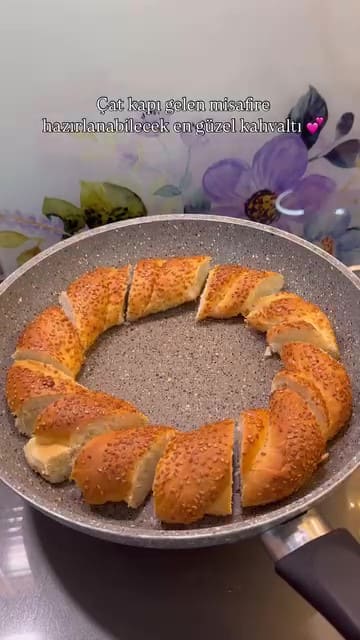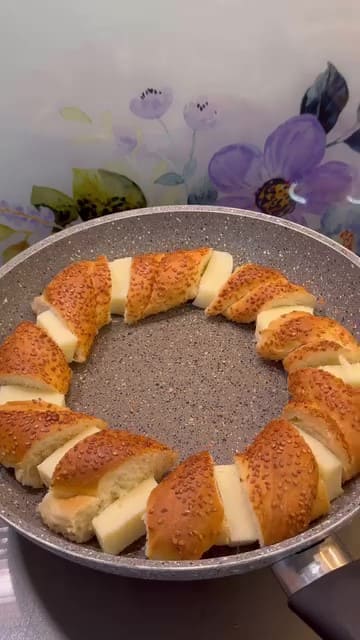

If there is one thing Turkish people take seriously, it is Sunday breakfast. This Turkish Simit and Egg Skillet is a creative twist on the classic “Simit-Peynir” (bagel and cheese) duo. By pan-searing pieces of sesame-crusted simit with spicy sucuk and gooey kashar cheese, you create a breakfast that is crunchy, savory, and incredibly satisfying.

❤️ Why You’ll Love This Recipe
The Texture Contrast: The toasted, crunchy sesame seeds on the simit caramelize in the butter, providing a perfect crunch against the soft, velvety eggs.
The Ultimate “Leftover” Hack: This is hands-down the best way to revive stale or hardened simit from the day before, turning it into a high-end brunch dish.
One-Pan Simplicity: It takes less than 10 minutes to prepare, and since everything is cooked in one skillet, cleanup is a breeze.
A Real Brunch Star: Both visually appealing and incredibly satisfying, this dish is guaranteed to be the highlight of your weekend breakfast spread.

💡 Expert Tips for Success
- Butter is Non-Negotiable: To truly unlock the aroma of the sesame seeds, use high-quality butter. It helps the simit toast beautifully and adds a rich, nutty flavor to the eggs.
- Low and Slow: Once you crack the eggs into the simit rings, turn the heat down to low. This ensures the bottom of the simit doesn’t burn while the eggs cook to your preferred consistency (runny or firm).
- The Freshness Factor: A handful of fresh parsley or dill added right before serving provides a bright pop of color and a refreshing herbal finish.
- Cheese Upgrade: For an extra layer of indulgence, sprinkle some grated Turkish kaşar or crumbled feta over the eggs just before they set.

❄️ Storage and Reheating
Reheating: To revive the texture, reheat in a skillet over very low heat with the lid on. Avoid the microwave, as it can make the simit rubbery.
Serve Immediately: Because of the delicate texture of the eggs and the crunch of the simit, this dish is best enjoyed fresh off the stove.
Storage: If you have leftovers, you can store them in an airtight container in the fridge for 1 day; however, note that the simit will lose its crispness.

🔄 Substitutions and Variations
- The Meat Add-in: Sauté some thin slices of Turkish sucuk (spicy sausage) or pastırma in the pan before adding the simit for a meat-lover’s version.
- Veggie Loaded: Sauté some green peppers and tomatoes in the center of the simit rings before cracking the eggs for a “Menemen-style” twist.
- Spice Balance: Beyond salt and black pepper, a generous dusting of Turkish pul biber (red pepper flakes) or oregano adds an authentic Mediterranean kick.

🍳 More Favorite Turkish Breakfasts
If you love the hearty and comforting taste of this skillet, don’t miss these other breakfast hits from our kitchen:
Zesty Turkish Boiled Egg Salad: Goodbye Boring Breakfasts!
Liquid Batter Gözleme: The 10-Minute Flatbread Hack
Turkish Scrambled Eggs with Purslane: A Superfood Breakfast
Did you get that perfect runny yolk? We want to see your skillet masterpieces! Tag @mutfagimdalezzet on Instagram, follow our breakfast boards on Pinterest, and subscribe to our YouTube channel for more 10-minute kitchen hacks and authentic Turkish flavors.

One-Pan Turkish Simit Breakfast with Sucuk and Eggs
Ingredients
Equipment
Method
- Cut the simit or simit bread into small, even pieces.
- Place the simit pieces in a medium-sized non-stick skillet, arranging them in a circle or filling the pan.
- Tuck the slices of kashar cheese in between the simit pieces. As they heat up, they will act as the "glue" for your skillet.
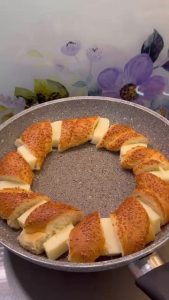
- Clear a small space in the center of the pan and add the butter. Let it melt and sizzle.
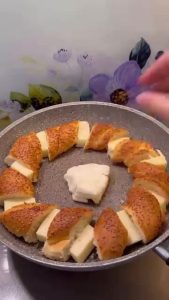
- Place the sucuk slices in the center with the butter. Sauté them for 1-2 minutes until they release their aromatic oils.
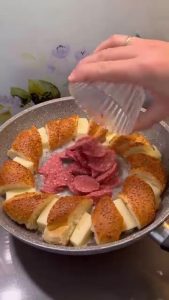
- Crack the eggs directly over the sucuk or into the center of the pan.

- Sprinkle salt, black pepper, and red pepper flakes over the eggs and simit.

- Cover the pan with a lid for 1-2 minutes if you prefer your eggs well-done and the cheese fully melted.

- Serve the skillet hot, straight from the stove, with a side of fresh tomatoes and a cup of Turkish tea.