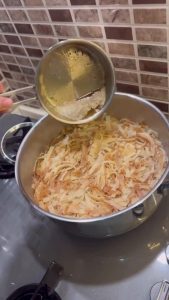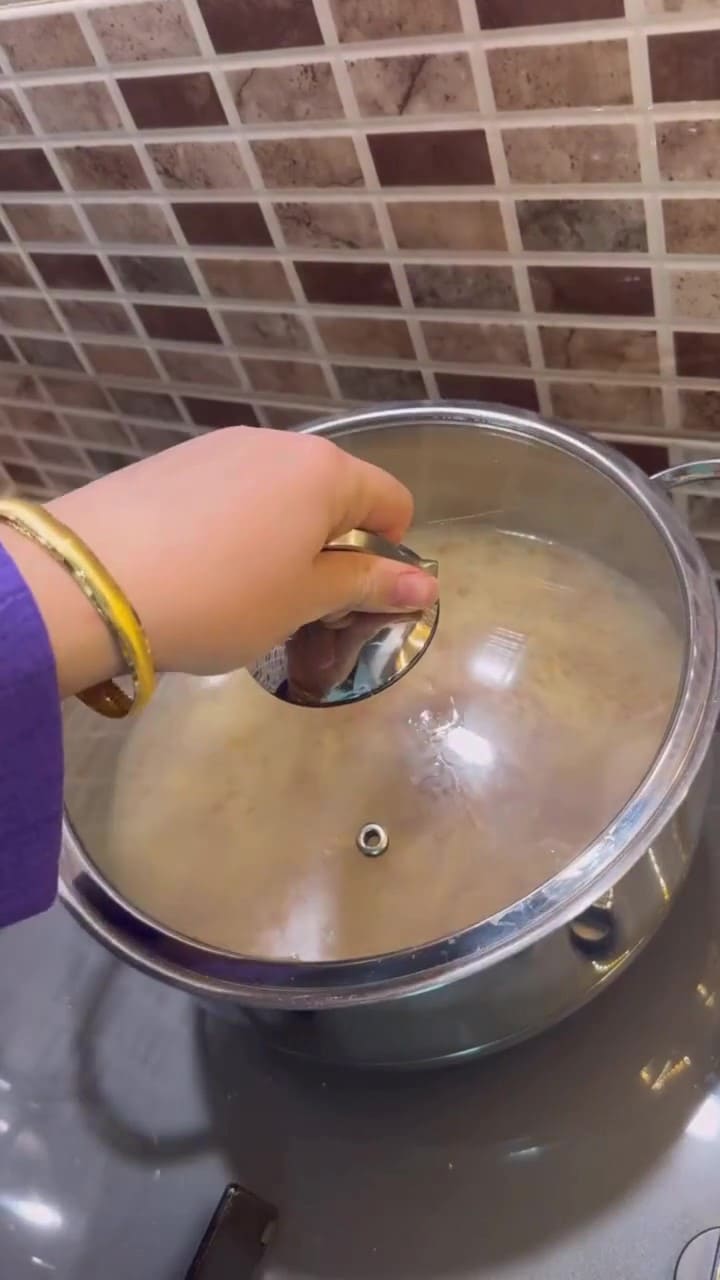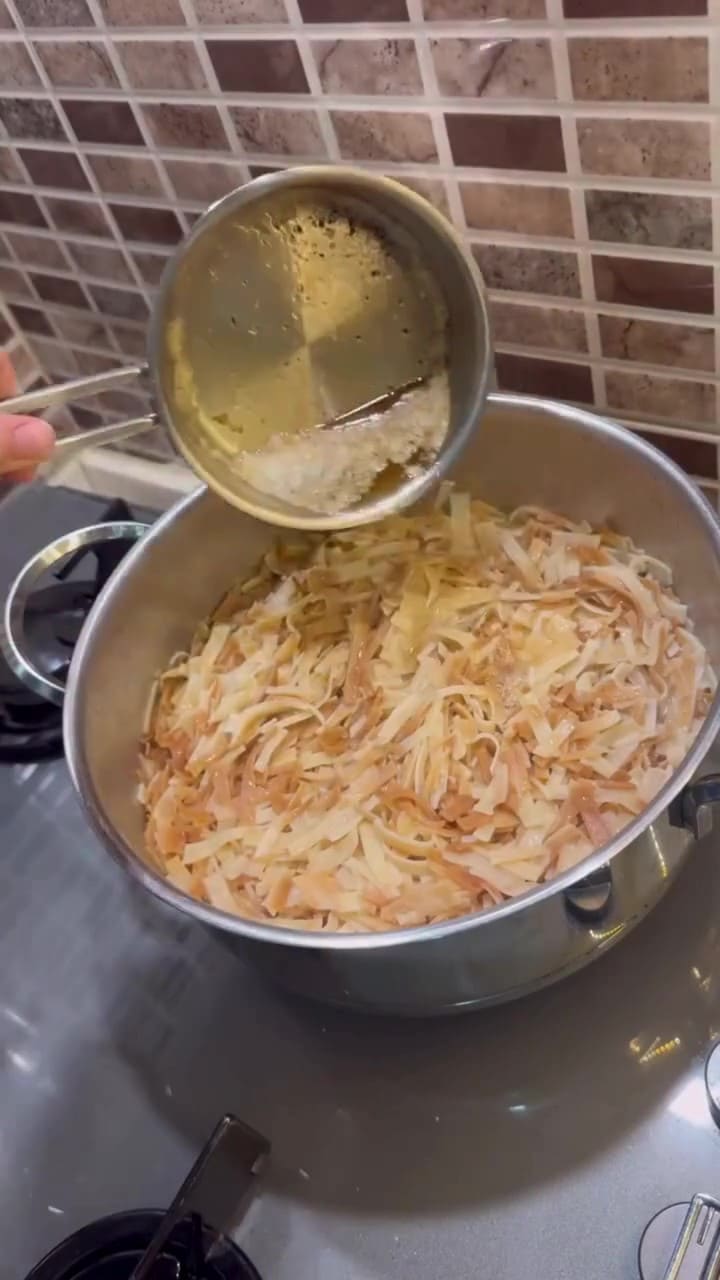
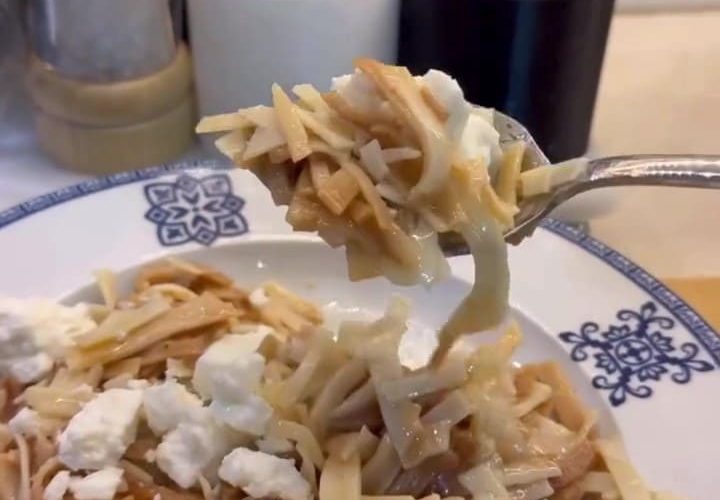
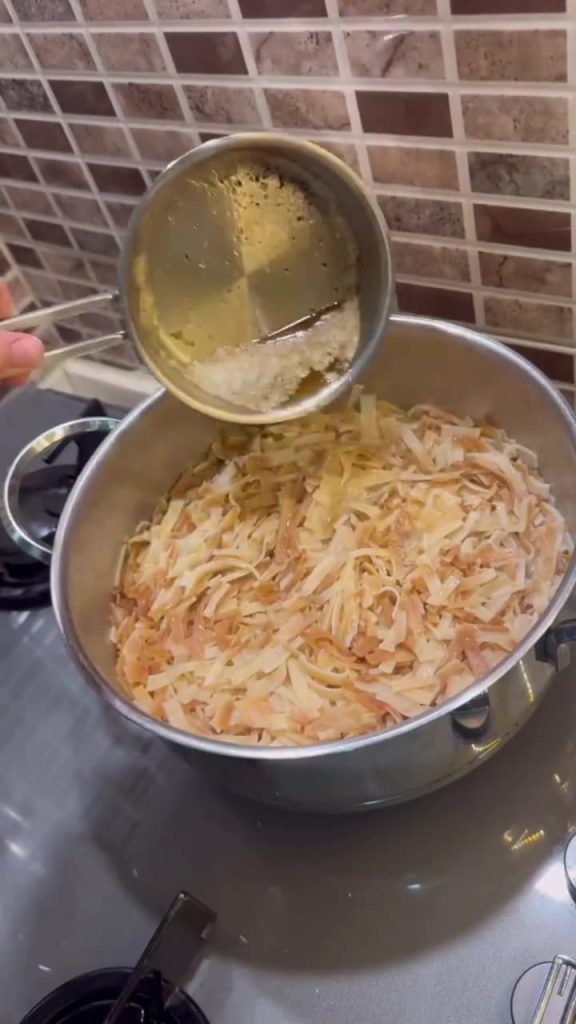
If you’ve only ever boiled your pasta in water, you are missing out on one of the best-kept secrets of Turkish home cooking: Erişte Pilavı. These hand-cut Turkish egg noodles are first sautéed in oil until they reach a deep, nutty golden color, then simmered slowly like a rice pilaf. The result is a “tane tane” (perfectly separated) texture that is vastly superior to standard pasta. Finished with a luxurious drizzle of browned butter and a crumble of salty Turkish cheese, it’s a simple yet majestic dish that works as a hearty main or a perfect side.
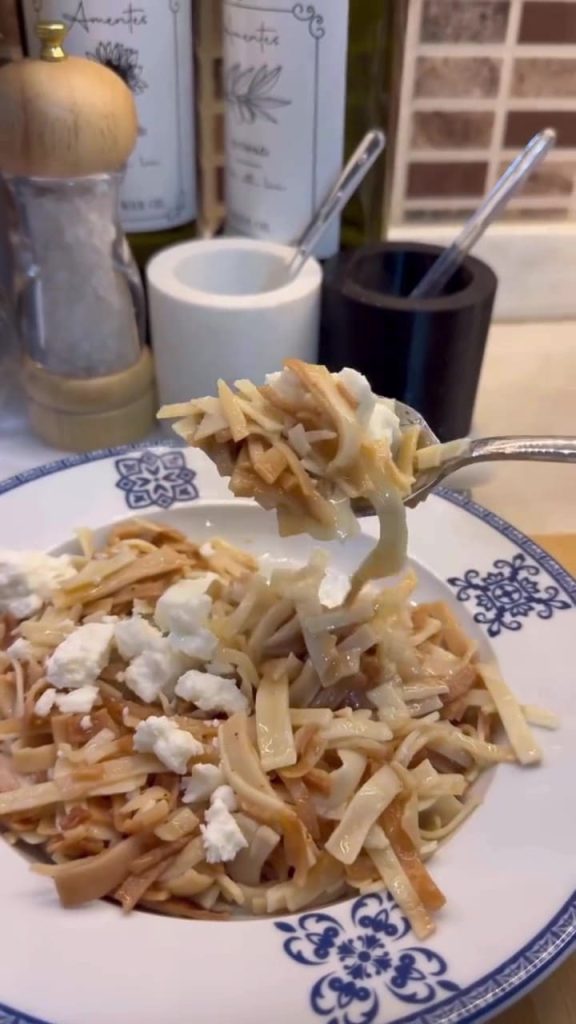
❤️ Why You’ll Love This Recipe
- Depth of Flavor: Toasting the noodles creates a rich, nutty aroma that you simply can’t get from boiling.
- The “Demleme” Secret: Resting the noodles under a paper towel ensures they stay fluffy and never mushy.
- Versatile: Serve it as a cozy vegetarian main course or as a side dish for grilled meats and stews.
- Kid-Approved: The buttery, cheesy finish makes it a favorite for even the pickiest eaters.
💡 Expert Tips for Success
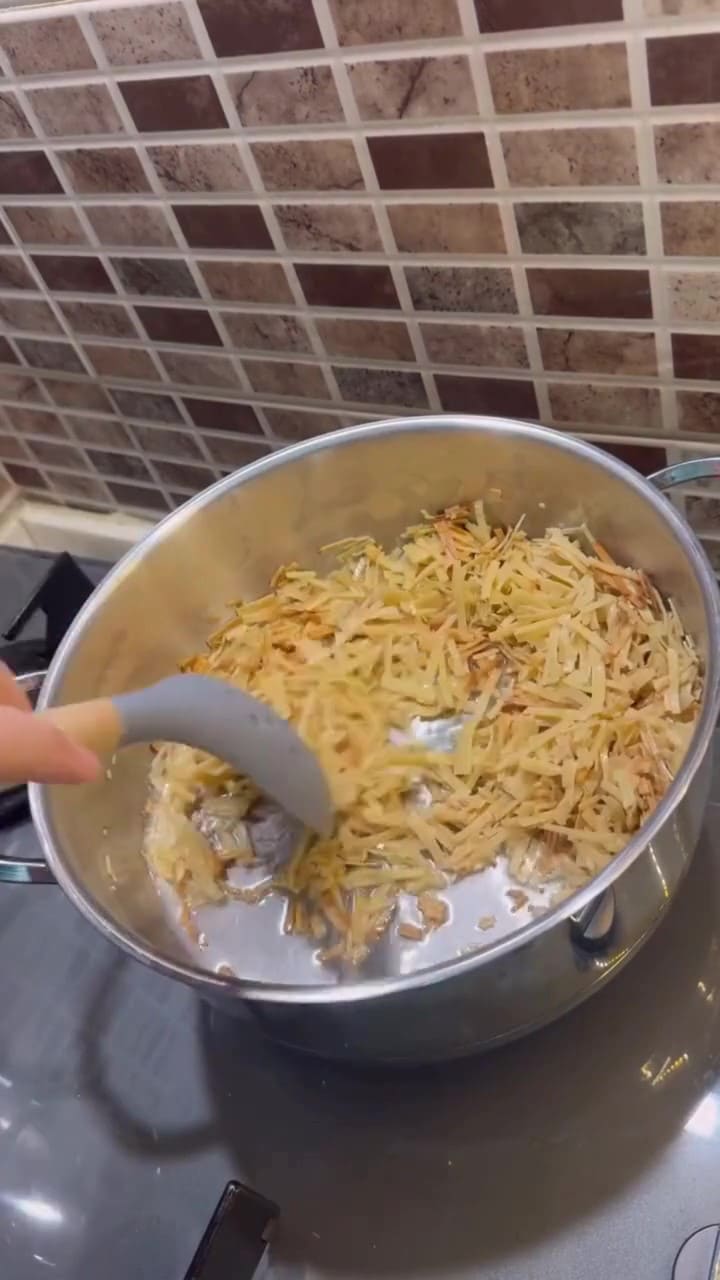
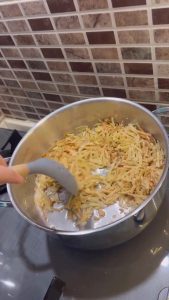
- The Golden Rule: When sautéing the dry noodles, stir constantly! They can go from golden to burnt in a matter of seconds. You want a mix of light and dark golden tones for the best visual appeal.
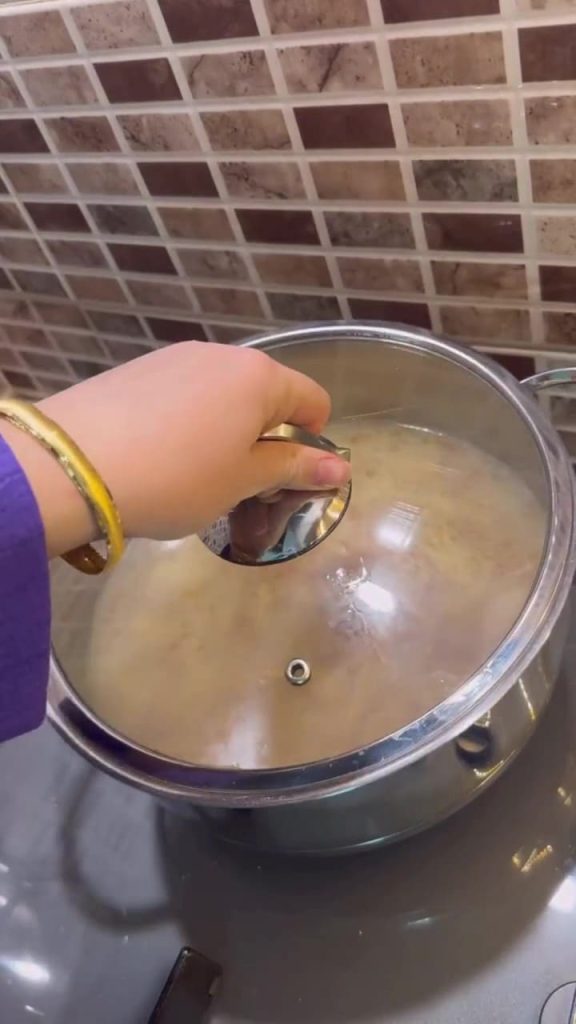
- Resting (Demleme): Just like Turkish rice pilaf, Erişte needs to rest. Placing a paper towel under the lid absorbs excess steam, ensuring each noodle remains distinct and “tane tane.”
- Butter Timing: Don’t add the butter at the beginning. Adding hot, sizzling butter after the noodles have rested creates a much more intense and fresh flavor.
- Cheese Selection: Traditional Tulum cheese or a crumbly White Cheese (Beyaz Peynir) is the best match. If you are in the US, a salty Feta or a sharp Goat Cheese works perfectly.
❄️ Storage and Reheating
- Storage: Keep leftovers in an airtight container in the fridge for up to 3 days.
- Reheating: Reheat in a skillet over low heat with a tiny splash of water or a small knob of butter to restore the moisture.
- Note: Unlike Italian pasta, these toasted noodles hold up quite well and don’t become soggy as quickly when reheated.
🔄 Substitutions and Variations
You can easily customize your toasted noodles with these three popular variations:
- The Nutty Classic: For a traditional village-style twist, add a handful of crushed walnuts to the sizzling butter at the final stage for an incredible earthy crunch.
- Protein Boost: Turn this side dish into a hearty main meal by stirring in sautéed minced meat (kıyma) or shredded chicken after the noodles have finished resting.
- Vegan Option: To make this dish dairy-free, replace the butter with high-quality extra virgin olive oil and use toasted pine nuts instead of cheese for a savory finish.
🥘 More Traditional Turkish Heritage Dishes
If you enjoyed this recipe, explore these other verified main course favorites and authentic heritage dishes from our live collection:
- One-Pot Turkish “Mantı” Pasta
- Baked Turkish Eggplant Moussaka
- Authentic Turkish Chicken Stew (Tavuk Haşlama)
- The Easiest Stuffed Cabbage Rolls
- Turkish Bulgur Pilaf with Fried Eggplant
Did you reach that perfect golden toast? Tag @mutfagimda.lezzet on Instagram, follow our Turkish Heritage boards on Pinterest, and subscribe to our YouTube channel to see our “demleme” technique in action!
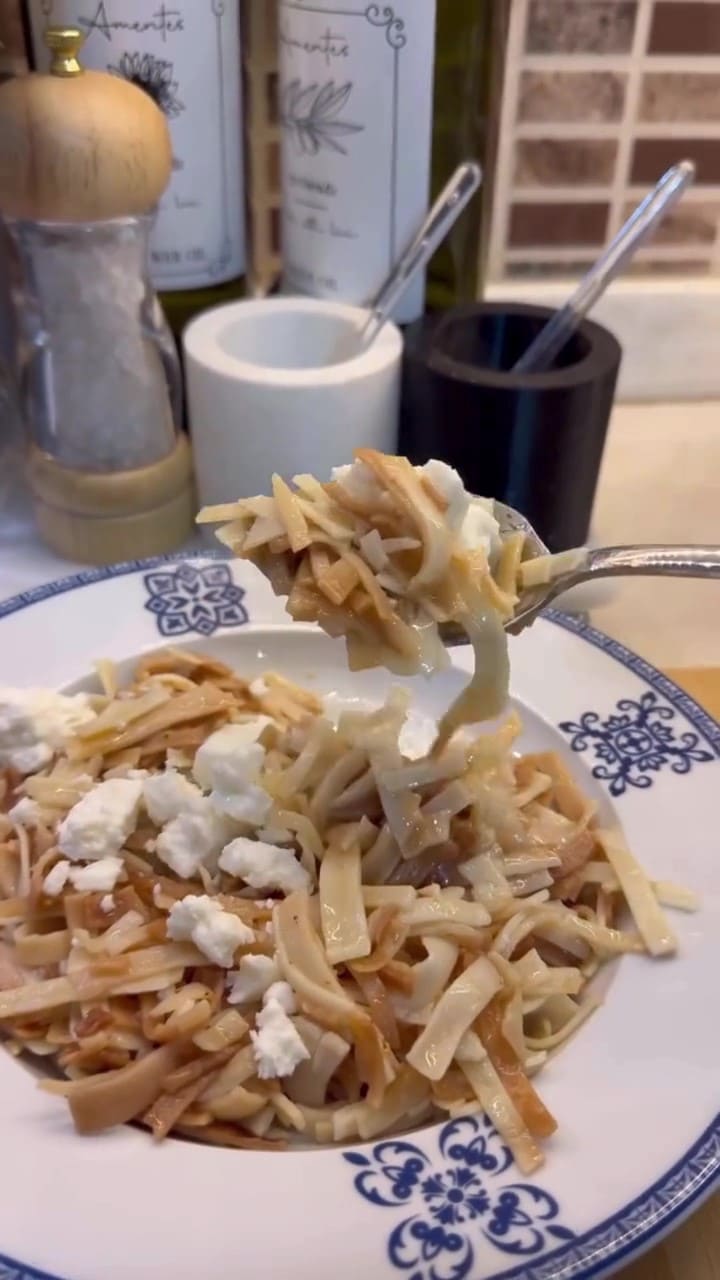
Traditional Turkish Toasted Egg Noodles (Erişte Pilavı)
Ingredients
Equipment
Method
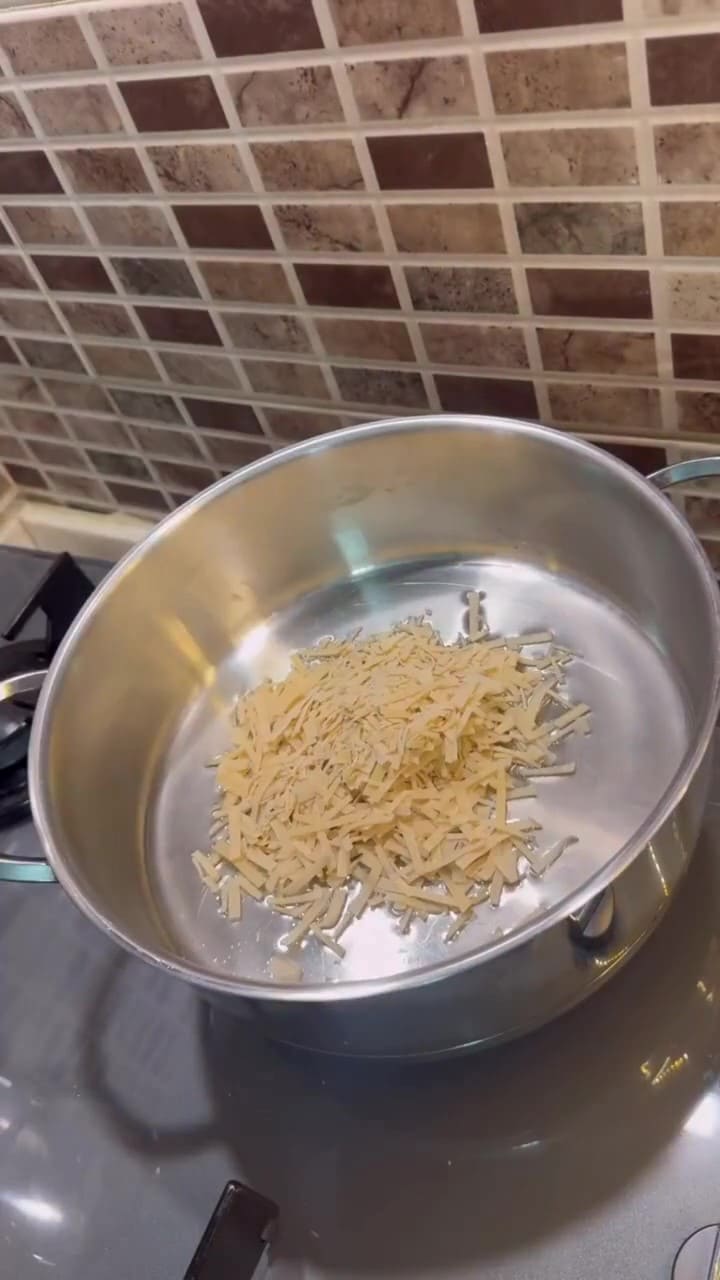
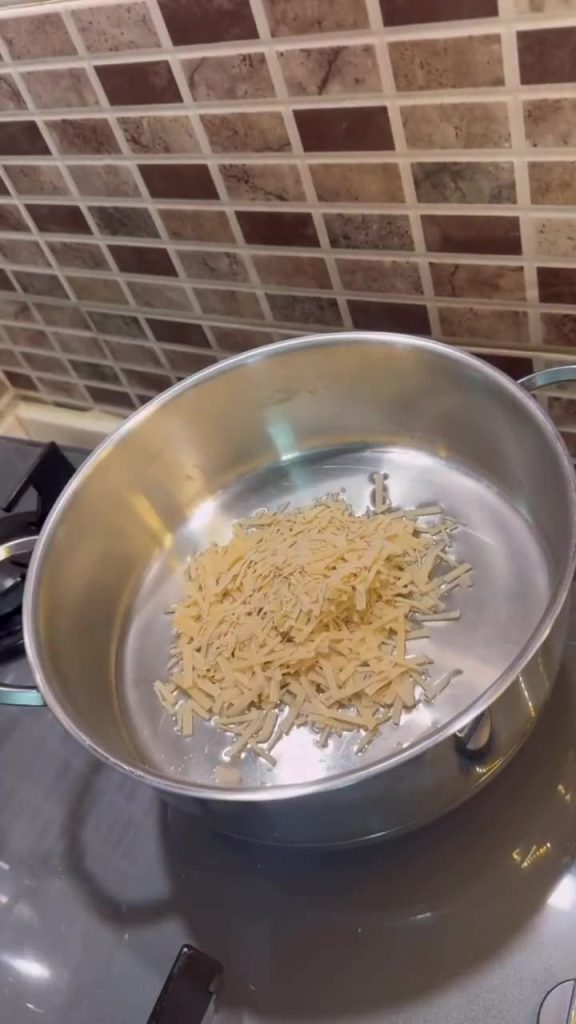
- Sauté the dry noodles in oil over medium heat, stirring constantly to prevent burning.
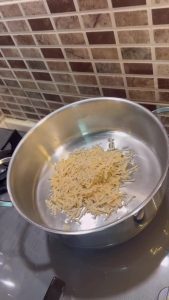
- Continue sautéing until the noodles reach a deep, nutty golden-brown color.
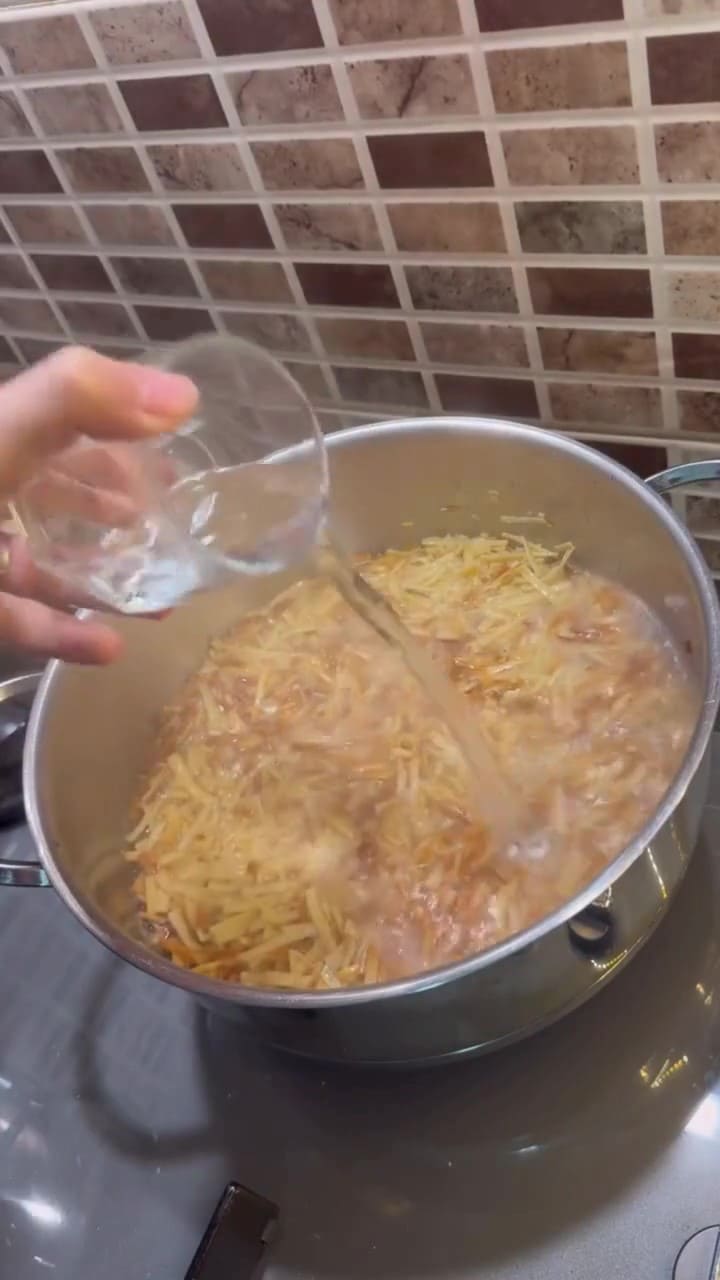
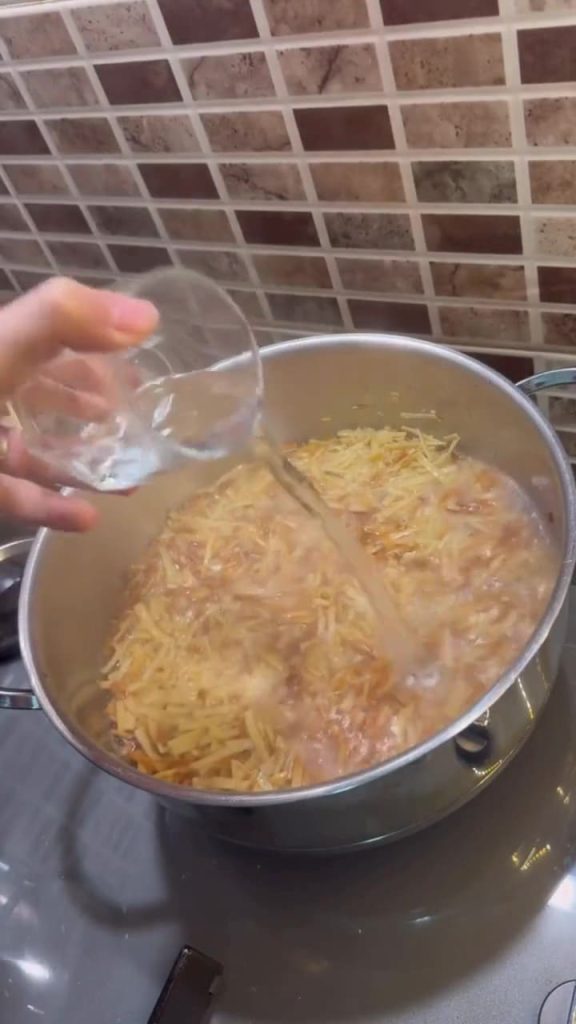
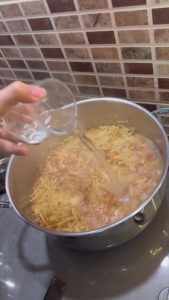
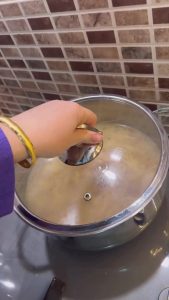
- Add hot water and salt. Cover and cook on the lowest heat until the liquid is fully absorbed.
- Turn off heat. Place a paper towel under the lid and let it rest for 15-20 minutes.
- Drizzle with sizzling browned butter and top with crumbled cheese before serving.